Solo exhibition at Kevin Kavanagh, Dublin

A Crack in the World (2024), oil, acrylic and mixed media on panel, 60 x 80 cm

Install photograph of Tumbling Earth solo exhibition at Kevin Kavanagh, Dublin

Float (2024), oil, acrylic and mixed media on panel, 50 x 103 cm
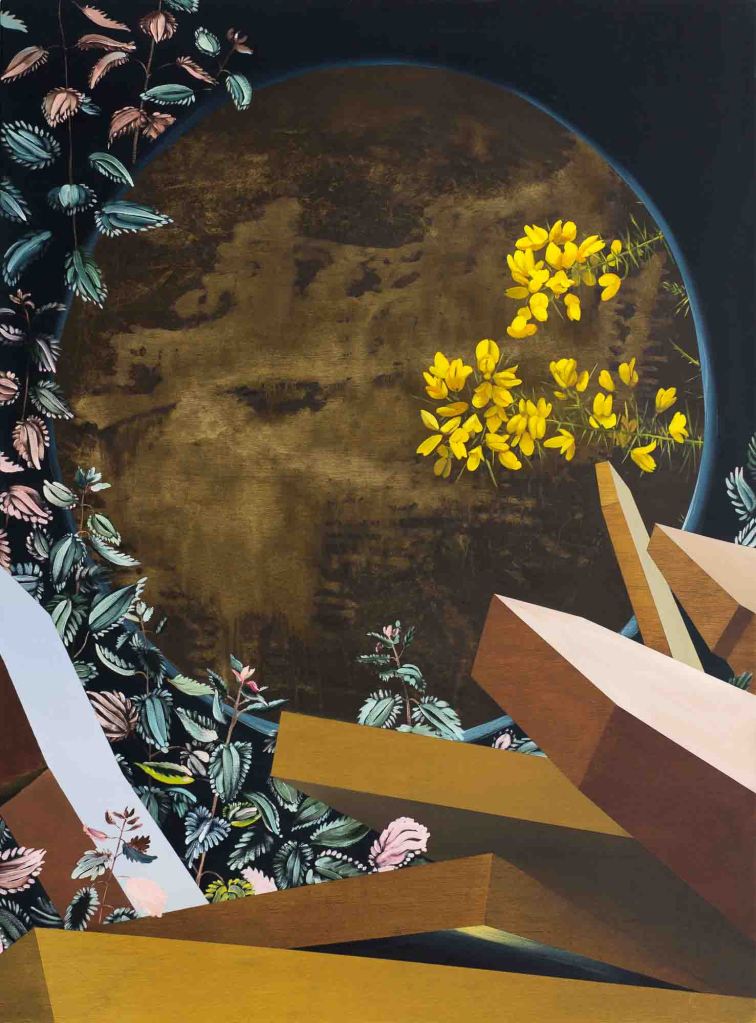
Mirror, Mirror (2024),oil on panel, 122 x 90 cm

Install photograph of Tumbling Earth solo exhibition at Kevin Kavanagh, Dublin

Monitor 1 (2024), oil, acrylic and mixed media on panel, 80 x 120 cm

Monitor 2 (2024), oil, acrylic and mixed media on panel, 80 x 120 cm

Black Ash (2024), oil, acrylic and mixed media on panel, 60 x 70 cm

Red Earth (2024), oil, acrylic and mixed media on panel, 122 x 163 cm

Haven (2024), oil, acrylic and mixed media on panel, 122 x 140.5 cm

Cormorant Song (2024), oil on two panels, 40 x 38.5 / 40 x 38.5 cm

Coastal Break (2024), oil and acrylic on panel, 41 x 49.5 cm
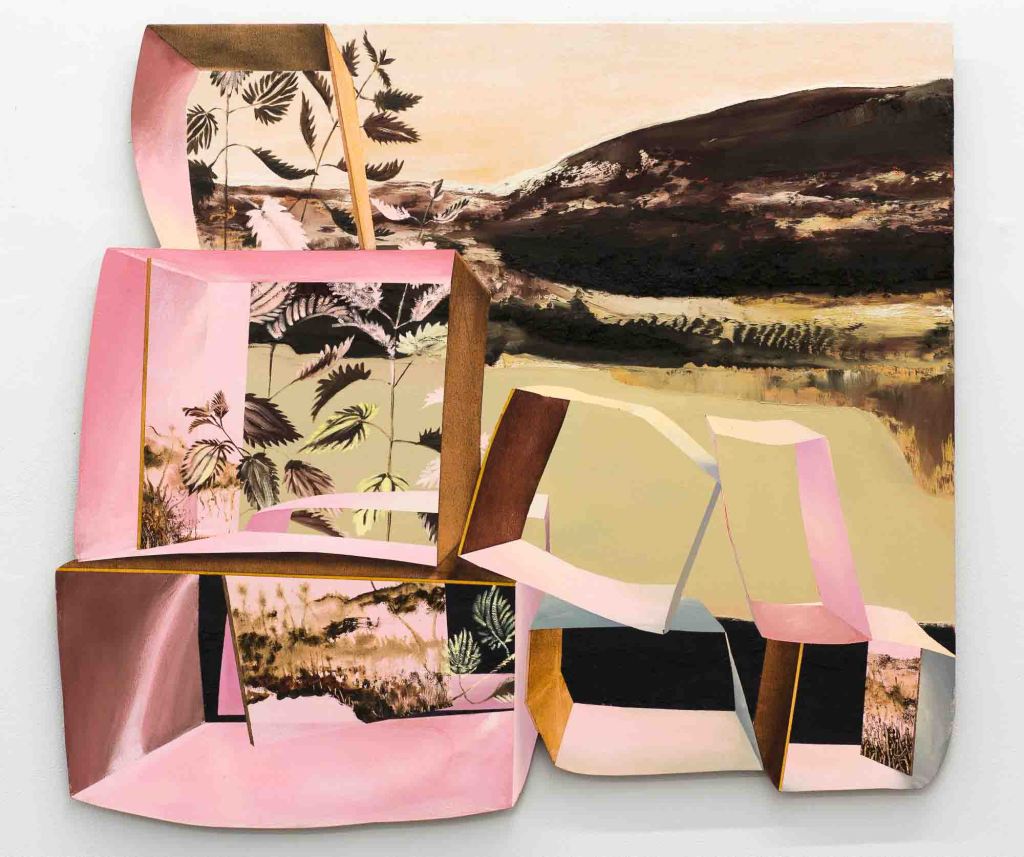
Shift (2024), oil and acrylic on panel, 80 x 89 cm

Mesozoic Dance (2024), oil on panel, 44 x 40 cm
Michael Buckley, Tumbling Earth, live performance in response to the exhibition at Kevin Kavanagh, Dublin, January 23rd, 2025.
Tumbling Earth – Exhibition Text
Earth, painted black, textured and dense, contains root fragments, its blackness implying underground dark depths, boundless and deep – profundis.
The man-made structures on top of this soil, together with the plants that grow from it, speak to our relationship to land, to the soil and to how it is ‘owned’, used and fought for globally.
This new body of paintings, by artist Deirdre Frost, features parts of buildings and plants in the artist’s local environment. The buildings are non-hierarchical, have been reduced to their essential shapes and taken apart – in places lying as rubble – at other times reminiscent of toy-like wooden architectural maquettes. Their simplicity of shape and the familiar plant forms that burst forth are elements that would be recognisable at any time in modern history.
While the paintings are composed of everyday elements, the work is embedded in a time of great global instability and crisis. The human figure does not appear within these paintings, but there are traces of the individual human experience everywhere in the work, and of life witnessed and experienced on a daily basis. Paintings of nettles are imbued with colour and vibrancy – each colour and brush stroke as unique as each leaf that grows in nature, influenced by its local environment and conditions. There is a playfulness, and reassembly of the basic subject matter within the paintings. The forms the buildings take in the work are not representative of how they appear locally, but are opened up, taken apart, toppled and cracked.
Nettles, brambles, thistles feature in the work, at times painted decoratively within taped sections – at other times breaking from their contained spaces – tumbling across the picture plane. These plants are thorny, inconvenient, pollen-rich and depicted full of character. The abundant thriving plants act as signifiers of hope and regeneration in this shared space of the man-made.
Titles such ‘Mirror, Mirror’ allude to the act of looking, of viewing. ‘Mirror, Mirror’, like the age-old fairytale asks us to question what we see, what the current state of affairs is. ‘Monitor 1’ and ‘Monitor 2’ are in the format of a living room tv, each framed in a multitude of plants, drawing the viewer in to look at what is framed within – notice the interrelation and repeated fragments in these works. The internet overloads us with undigested information, and we live with the threat of societal manipulation through social media. These paintings do not present any new information, but rather suggest new ways of looking and provide space for the viewer to look and think, and to form an individual opinion. ‘Haven’ shows fragments of spaces, modular type shapes can be seen in the background, fallen pieces in the foreground, the title alluding to our basic human requirements for a roof over our heads and the dignity of having a personal space. Again, the colour and composition are playful, suggestive of re-thinking, and of problem solving. The chosen colours, for example in ‘Red Earth’ describe a space through the prism of lived human experience. ‘Mesozoic Dance’ features delicate magnolia flowers, a tree that has existed for over 95 million years, before bees had evolved. Its dancing impermanent petals belie the strength and persistence of this tree that has survived and thrived – despite all – since the time of the dinosaurs.
 Deirdre Frost